
The Central Courtyard Villa – World Buildings Directory | Architecture Search Engine
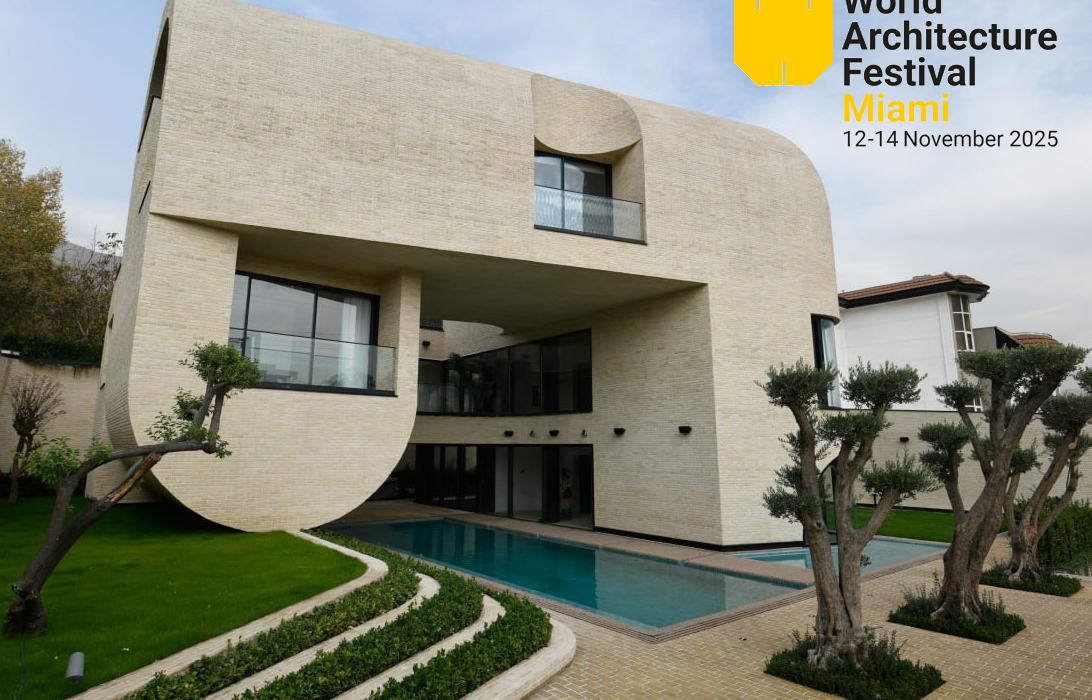
The Central Courtyard is the most prominent feature of traditional Iranian architecture. It is a space which resolves cultural and environmental problems at one and the same time: in the face of harsh and unfavorable climates it controls light radiation and balances out radical highs and lows in temperature, and in response to certain cultural necessities it well defines and separates the private lives of its residents and keeps the personal away from the more public spaces. The Central Courtyard Villa employs these very pros while simultaneously attempting at a more contemporary translation of this long-lived Iranian space: the Central Courtyard here is opened to the entire surface of the project so as to resonate and echo its features throughout. While the climactic characteristics of the Central Yard and its potential to create privacy are traditional Iranian features which we insisted on keeping, we still aimed at bringing out from its newer qualities as well; such as the three-dimensionality of the Courtyard in the project, its spatial permeability on various levels, and more varied spatial relations with the interior resulting from formal and spatial distortions. In other words, if the Central Yard was only an introverted space by nature in the traditional Iranian architecture, this project stands on the edge of introversion and extraversion. Hence, based on the various geographies existent in both plans and sections, the user experiences a diverse spectrum of intro- and extra-version. The creation of the Courtyard in the project is in fact owed to certain tunnels and ribbon structures stacking up on top of each other with continuous arches. From this stack of tunnels is born a three-dimensional Central Courtyard which renders various degrees of spatial permeability. This permeability is felt on the floor (through the pool), in the walls (due to the openness in the two facades across), and at the ceiling (with its exposure to the sky). The exposure to the sky above, the pores in the façade walls, and the pool as a cavity below all aid in creating bodies which are in essence soft, porous, and negotiable—bodies which fuel the enclosed spaces of the interior and the semi-open spaces in the levels with unique spatial qualities. The tectonics of the project is also in line with the quality of hybridity, implementing at once a beam and column structure in addition to an arched one with the bricks covering the arches. The mixture of this tectonic with a spatial structure which is at once familiar and strange to the user, coupled with the presence of water, light, bricks, arches, the cuts in the form, and the sensory and perceptional effects of experiencing all that, creates in the user a sense of déjà vu regarding the history of being present in the architecture of Iran.